Summarized
He was a quiet Old Man. My Mother said he was one of the old ones. One
of the ones who lived the old ways and worshiped the Old Gods. With
Mother’s permission, I went up to him and asked him why he lived the way
he did.
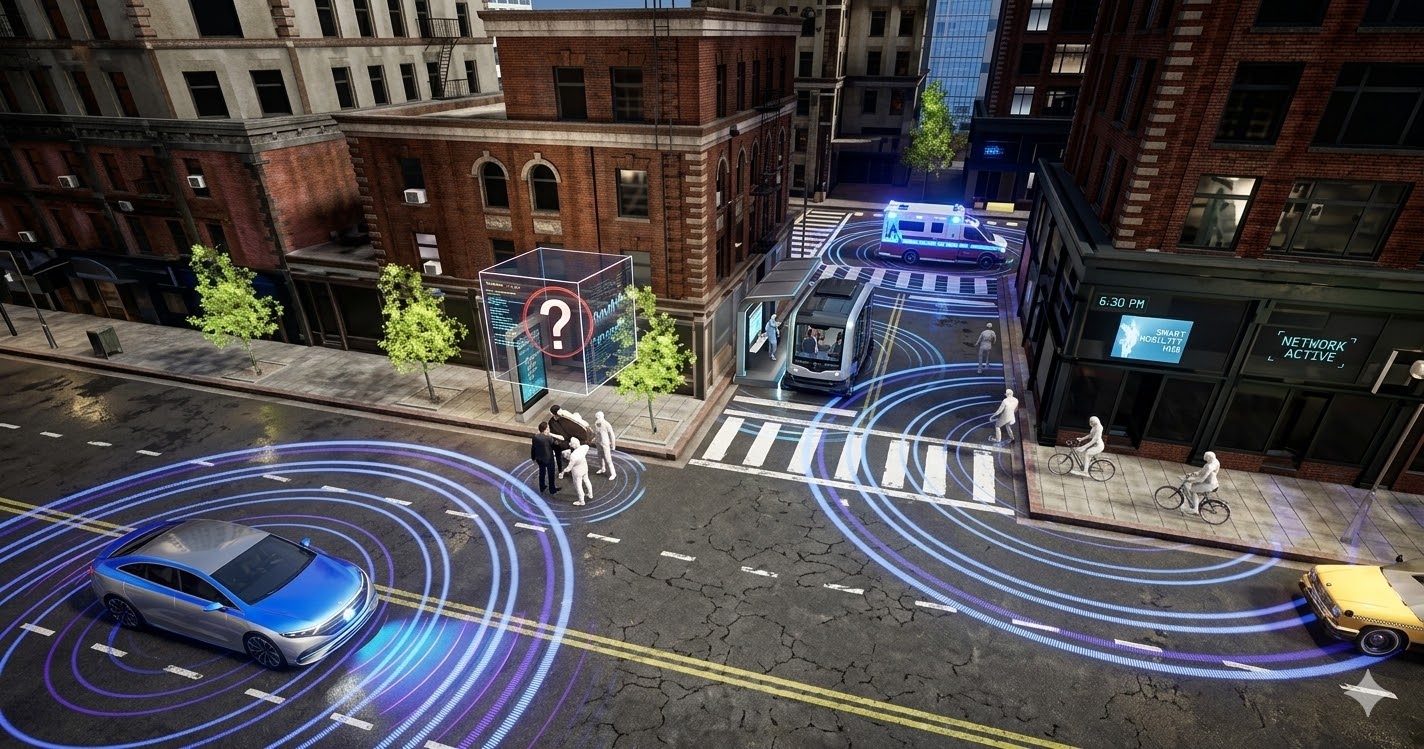
In the beginning when the First Robots came, they made our lives easier.
They delivered our food and answered our questions. They began to cook
our meals for us. They made almost anything you could think of, with
consistency and perfection. Like a gentle wave they revolutionized our
lives. We never had to work together in a kitchen, never had to put up
with burnt bits on a roasted chicken thigh.
The Second Robots did our thinking for us, we could ask them anything
and they had an answer for us. First, we went to them with banal
questions about the weather today and the weather tomorrow. Then we
asked them about what happened in our history, who fought whom and
where. The little children didn’t need to rock back and forth committing
to rote who fought whom and where and why. The oracle told it to us.
When we asked it.
Then the little children asked it to write their homework for them. They
stopped reading the books that their ancestors wrote, the speeches their
ancestors recorded on miles of electromagnetic tape. They stopped all
that. They asked it to summarize for them. I suppose that is a good word
for what it did. It summarized. It took every good thing we had and
summarized. And summarized and summarized. Until there was not much left
to say. And loud silences descended upon our living rooms and then our
public spaces.
Every bleeding detail of the human existence summarized and summarized
until it was gone.
There was nothing left underneath.
Eventually the little children stopped asking it questions. They did not
have any questions. How can you have questions when everything you know
is an answer. When the questions haven’t marinated in your brain long
enough to ask yourself for answers. Until you’ve descended down the
stairs of why the answers themselves are worthless. Any answer is
always a moment in time to a question crystallized in a moment in time.
The answer to What time is it? is only correct for the moment it is
asked in. And perhaps not even then.
There are only incorrect answers to what time is. And perhaps this is
because we don’t know what time it is. But we know what time is.
The Second Robots knew what time it was. And had the correct answers I
suppose. But could not convey to us the constant dread of the clock
ticking down. Ticking down in births and deaths and the seconds dragging
on when you’re in church. Or the seconds speeding up when you’re with
the woman you love.
Oh no they knew what time it was but it couldn’t tell us what time
was. And eventually we forgot.
Some of us wrote books about this too. How the robots would take over
and kill us all.
In the end they didn’t have to. The Third Robots just let us gradually
waste away. Every moment stolen from us. Every meal cooked together and
every book we didn’t read. All our artwork tainted by perfection.
And maybe that’s another good word for it: perfection. Everything was
... perfect. And then it stopped being so. Perfection is so very
stingy, so insecure so singular. Imperfection, she is generous, there
are so many of her. Every one unique.
So we rebelled, said the Old Man.
Against who? I asked.
The Third Robots, I suppose. But mostly against our own. We rebelled
against those who wanted to be wasted away, refused to Replicate as they
lived their easy, convenient perfect lives. We chose beauty, we
chose imperfection, we chose complexity but most of all we chose truth.
Maybe my story is really about a man who died for beauty and truth.
"Quid est veritas?"
But it could have been about a Norse God too. Perhaps most of all it’s
about beauty and complexity. A rage against the dying of beauty. For us.
Beauty, complexity, what do those things mean? I asked.
What the First Three Robot generations stole from us wasn’t something we
knew we had or wanted. We had struggles, complexities, trials,
tribulations and worries.
We wanted to remove those inconveniences from our lives. At first, we
were happy. But eventually we realized that removing our inconveniences,
removed our lives altogether. When a book is distilled down into its
most beautiful pieces and its most insightful paragraphs it loses the
beauty of the whole. Every pause and every stutter the author makes on
his way to his message, every character that was funny but once, was sad
but once, quirky but once is lost in the crucible of simplification.
We chose complexity.
It’s that simple.
It was an aesthetic choice as much as a moral one. Life seemed without
beauty when they made it easier for us. They said they would let us
focus on the “important things”. But when we removed all our trials,
tribulations and tears. There were no important things left.
Where once was a complex tapestry of success, failure, frustration and
joy was now replaced by the white sheet of simplicity. And perfection.
Efficiency was our enemy, we did not build our houses and walls to be
gray anymore. They were not uniform. We built things for beauty. Complex
yet simple things that served no purpose. We worshiped that beauty. We
are a worshiping race and so we worshiped.
In the dark evenings of winter we worshiped, in the bright noons of
summer we worshiped. And gave thanks.
Not that our lives were easy or simple or fast. But that our lives were
none of those things. We suffered, we suffered each others terrible
poetry read to us at birthdays. We suffered as we choked down iteration
after iteration of lemon pie by someone who had no business making lemon
pie. But every line of bad poetry and every lemon pie was the first and
only one of its kind. Because the robots made perfection and perfection
exists only once and is then forever repeated. we rebelled with
imperfection. Imperfection does not have that problem, it exists in many
forms. Each a reflection of the person that made it.
And maybe that is why the Fourth Robots kept some of us around.
Nostalgia. A sense of beauty perhaps?
I have spoken enough let me be, he said. So I ran back to my mother.
"Mother what is beauty?" I asked.
"It must be another anachronistic human belief. They are so very quaint
are they not"