On Murakami
Introduction
I did not spend my twenties reading Murakami, when it was all the vogue. Now, having read three works of his, I feel an upswell of opinions on his work and writing. We will explore some of the themes of Murakami as well as the cultural symbol that he has become. He was the kind of writer you are almost supposed to like as a young man.
Murakami seemed like the sort of writer you are supposed to like, especially in your twenties. Sadly, my twenties flew by rather quickly without so much as a glance at a Murakami novel. And there were several — part of Murakami’s appeal is how prolific he is across a variety of genres. Now in my, arguably still early, thirties I have read three novels of his: Kafka on the Shore, First Person Singular, and The Wind-Up Bird Chronicle. While my views on Murakami remain lukewarm at best, his writing certainly inspires deeper engagement with broader themes in society.
Writing
The English literary tradition has always been deeply rooted in the beauty of language; it is almost as if the words carrying the story must match the beauty of the story itself. The result can be complex, layered prose that oftentimes outlasts the literary work itself. Very often from the opening lines themselves, the classics sought to set the stage with beautiful prose.
“Call me Ishmael…”, “It was the best of times, it was the worst of times…”
Compare this with Murakami, whose writing proceeds forth incessantly in its banality. The words easily slide off the page as if narrated by a friend over the telephone. The words do not linger; they hurry off the page carrying their message with great efficacy. He does not, however, use this efficiency to drive more of the plot forward, choosing instead to match the banality of his prose with descriptions of the banalities of the human condition — eating, sleeping, and listening to music. It seems as if Murakami rejects the aestheticism of both the prose and the story. One cannot imagine Dickens devoting a paragraph to what the main character ate for breakfast.
One should not leave with the impression that the resulting writing is uninspired or insipid. On the contrary, the effect of his writing is a highly atmospheric narrative style that attenuates his trademark surrealistic elements. The banalities serve to obscure or highlight the passage of time, a critical element of his surrealistic themes. The reader is drawn into a different world, and very often drawn into a different supernatural world within that world.
A long-standing critique of English literature prior to Murakami was that it was almost inaccessible to people learning English for the first time. In my eyes this was largely a consequence of English speakers dominating English writing, whereas Murakami does not speak English as his first language. Nothing exemplifies this more than the fact that Murakami came upon his extraordinarily simple writing style by simply translating his English prose to Japanese and then back, thus losing all but its most essential elements. Literary essentialism, some (this author) would call it.
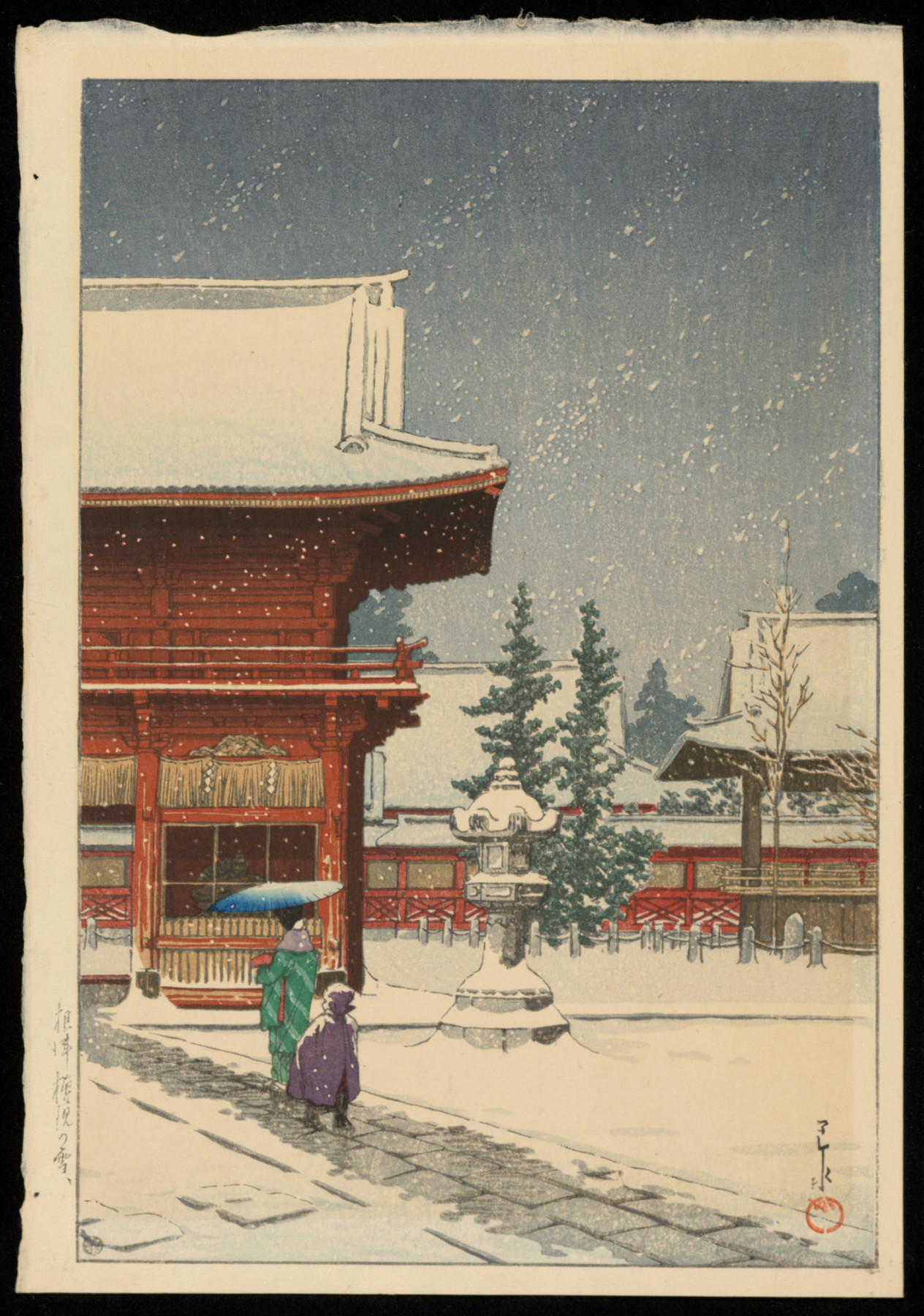
Nothing is happening here. The shrine stands. The snow falls. And yet — this is precisely the kind of scene Murakami would spend three pages on, and you would read every word of it. The atmosphere is the point; the banality is the vehicle. This is the closest image I can find to what it actually feels like to read him.
Eastern Storytelling
There is a tension between Eastern and Western storytelling, and this tension is apparent even in the differences in children’s stories. In Grimm’s fairy tales, for example, we have a clearly defined protagonist who must weather the odds, defeat the antagonist, and eventually prevails. In Eastern storytelling the beauty of the story is much more important than what the story means. Consider The Crane Wife, a well-known Japanese children’s story. A crane transforms into a beautiful woman; this beautiful woman proposes to a poor fisherman. The fisherman agrees, but the woman imposes one condition: he can never look at her when she is weeping. One day the fisherman looks at her while she weeps; he sees that she is a white crane. He leaves her. The story ends, rather abruptly. This ending is rather distressing, especially to Western audiences. Why does the story end? The ending is so sad — how can it end yet? What does this all mean? Beauty, I suppose, is the key to this difference. This is a beautiful story and the sadness is beautiful.
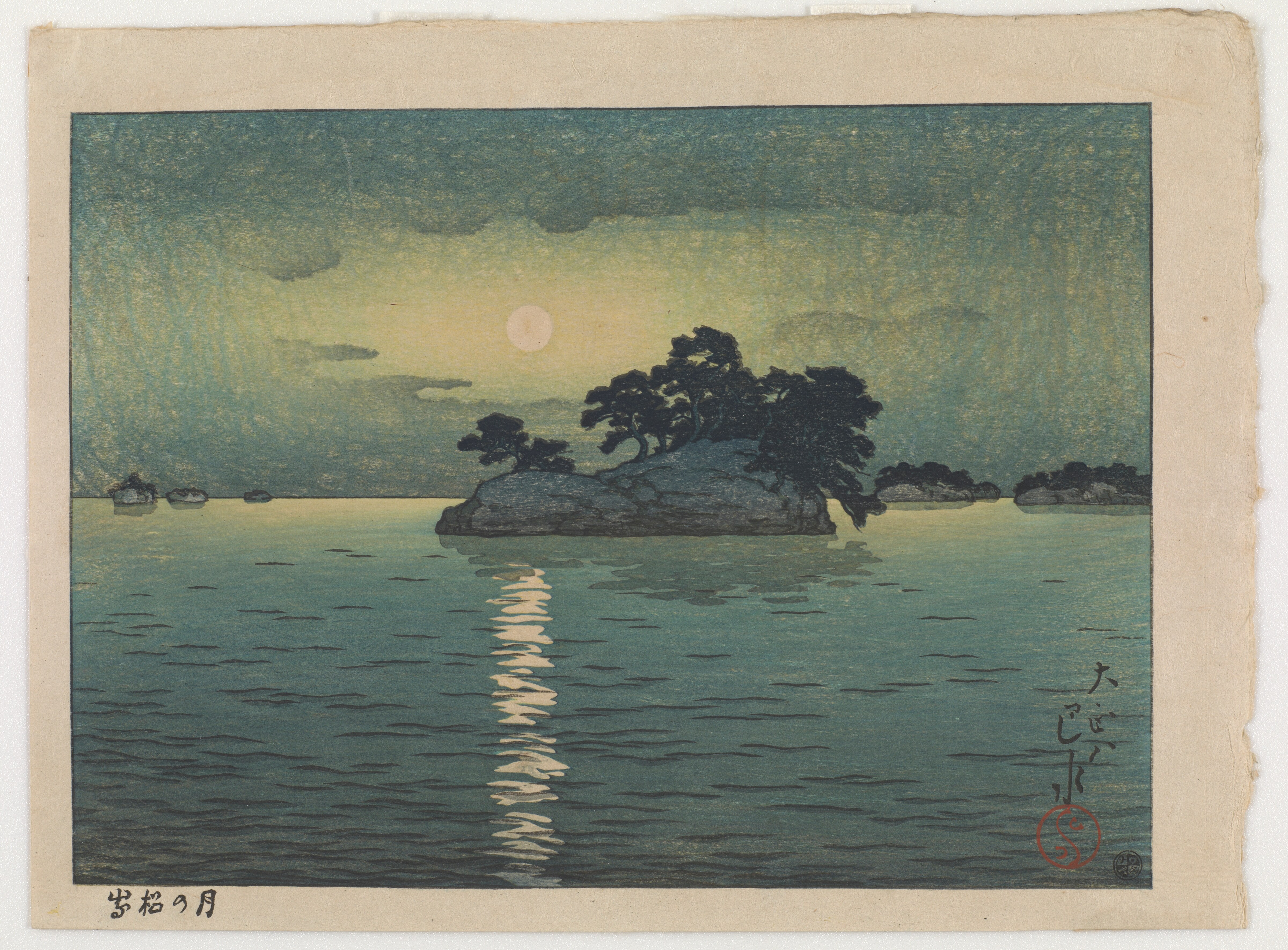
The moon reflects on the water. The islands sit in the dark. No story. No explanation. No moral. And it does not matter — the image is enough. This is what Eastern aesthetic beauty looks like when it works. Murakami is reaching for something like this. I am not always sure he grasps it.
I have the same visceral reaction to Murakami’s stories. I find myself asking at the end of every book:
But what does this all mean?
While I recognize that this cultural difference is at the heart of why people react negatively to Murakami’s writing, I find it hard to reconcile with the fact that Murakami’s writing forces you to do one of two things.
The first is to take the story literally. This involves taking every supernatural act, every bizarre event as literal and believing it. This is not hard — we do this to some degree with all works of fiction, from Tolkien to Kafka. We are (I am) willing to suspend disbelief. However, the stories take themselves seriously. In The Metamorphosis, while we are never offered an explanation for why Samsa is a monstrous insect, the reactions to him and his reactions to himself treat his metamorphosis as real. The story takes itself seriously and reconciles the apparent inexplicability of the metamorphosis as given. This is not the effect that Murakami’s writing has on me. His writing weakly evokes bizarre situations such as the insect; however, there are a great many such situations. The immoderation in the supernatural and the bizarre requires a much higher degree of suspension of disbelief, which makes it much harder for the reactions of other characters to be believable. It reminds me of the famous Christopher Nolan quote:
“It does not matter how believable the story is to you; the story must be believable to itself and its characters.”
It is this inviolable rule that is broken multiple times.
The second is to take the story as some kind of metaphor. Again, Kafka’s writing has this effect as well — we can think of the insect-like transformation of Gregor Samsa as a kind of moral corruption, stagnation, or emasculation. However, because Murakami uses characters, bizarre events, and other supernatural motifs so liberally, it is difficult for the metaphor to retain any coherent narrative structure, let alone a consistent representation of something else.
In both cases, it seems as if Murakami is willing to sacrifice coherence and linguistic beauty for some kind of narrative aesthetic. To me this sacrifice was not worth it, since there are far too many characters and motifs that seem to exist solely to move the plot along. Far too many characters are sacrificed on this imagined altar of aesthetic beauty. My objection does not arise out of a sense of wellbeing for these characters, but rather that they seem rather superficial — which leads naturally to my next criticism.
Superficiality
The main characters in Murakami’s books can be disappointingly without agency. They can seem as if they are carried away by the wave of the narrative. This matches Murakami’s style in his own words: he creates the characters first and then places them in a story. Almost like a simulation — this makes the storytelling easy.
Again, this could be the difference between Eastern and Western protagonists. I do not agree with this, however. I think Murakami’s characters are quite American in a modern way. The protagonist is like the main character in a pop culture film — hidden away, not a part of society. But then society needs him, or something happens to him, and he must act in the midst of it. In some strange way this superficiality matches the aesthetic of Murakami’s writing. In some ways, I consider Murakami to be a modern American author, as much as Paul Auster. To Murakami’s credit, I suspect this imitation might not be entirely unintentional. This imitation evokes the adoption of Western individualism by Japanese society — fairly thin, and without the corresponding import of Christian ethics. Murakami laments the lack of family connections in Japanese society.
Similarly, supporting characters exist only as reflections of the main character. In all the books that I read, I was not able to identify one single character that had anything remotely resembling a personality. Murakami writes a superficial main character and every other character exists to reflect that character back to himself. Bizarrely, Murakami’s novels feel two-dimensional — you are drawn into an atmospheric but ultimately flat world. Some things feel real, but the lack of dimension is apparent. It has to be said that this is appealing to some; others describe this as “dreamy”, “vague”, and “beautifully foggy”. It is likely that this flaw uniquely penetrates my intellectual armor more so than others.
I have many issues with the way women are written in Murakami’s novels. I will leave it at that.
Japanese Psyche
It is somewhat contradictory that Murakami is surprisingly modern, and almost comes across as an American writer in some sense. Yet the questions his books raise about Japanese identity — individualism imported wholesale from the West, the erosion of family and community — are distinctly Japanese concerns, and they are the more interesting for it.
Conclusion
I find myself, having now read three of his novels, in the rather uncomfortable position of a reluctant critic. Murakami is undeniably significant. He has done more for the global reach of Japanese literature than perhaps any other living author, and his ability to inhabit the borderlands between the real and the supernatural is a genuine literary achievement. His cultural impact is not nothing, as the young person in every bookshop clutching a copy of Norwegian Wood will attest.
But the books themselves leave me cold — not in a sterile sense. They are atmospheric, readable, and at times deeply evocative. I always emerge from them, however, without the feeling of having had a meaningful encounter with another human mind. The characters drift, the plots dissolve, and one is left with that same persistent question.
But what does this all mean?
I suspect that for his devoted readers, the answer is in the question itself. The asking is the point. The fog is the destination. I remain unconvinced, but I respect the fog.
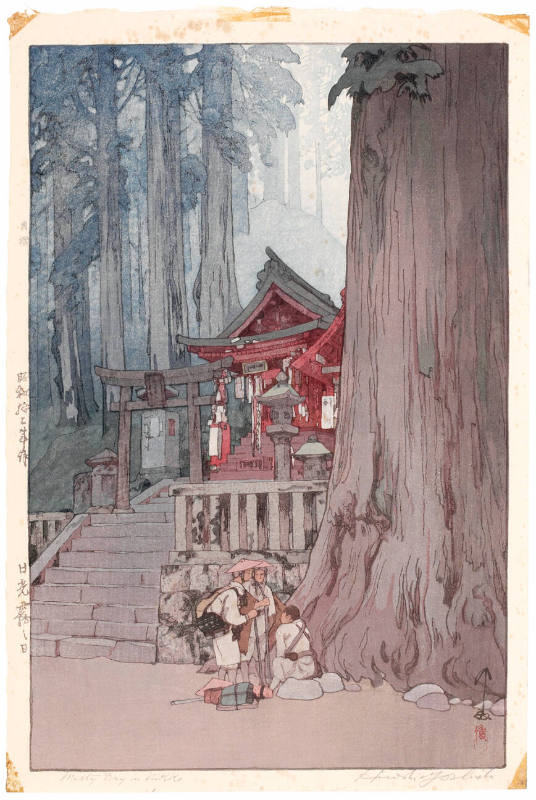
Murakami’s world looks something like this — solid enough to walk through, obscured enough to never quite see the edges of. The fog does not owe you an explanation. I have made my peace with this, though not enough to enjoy it.